
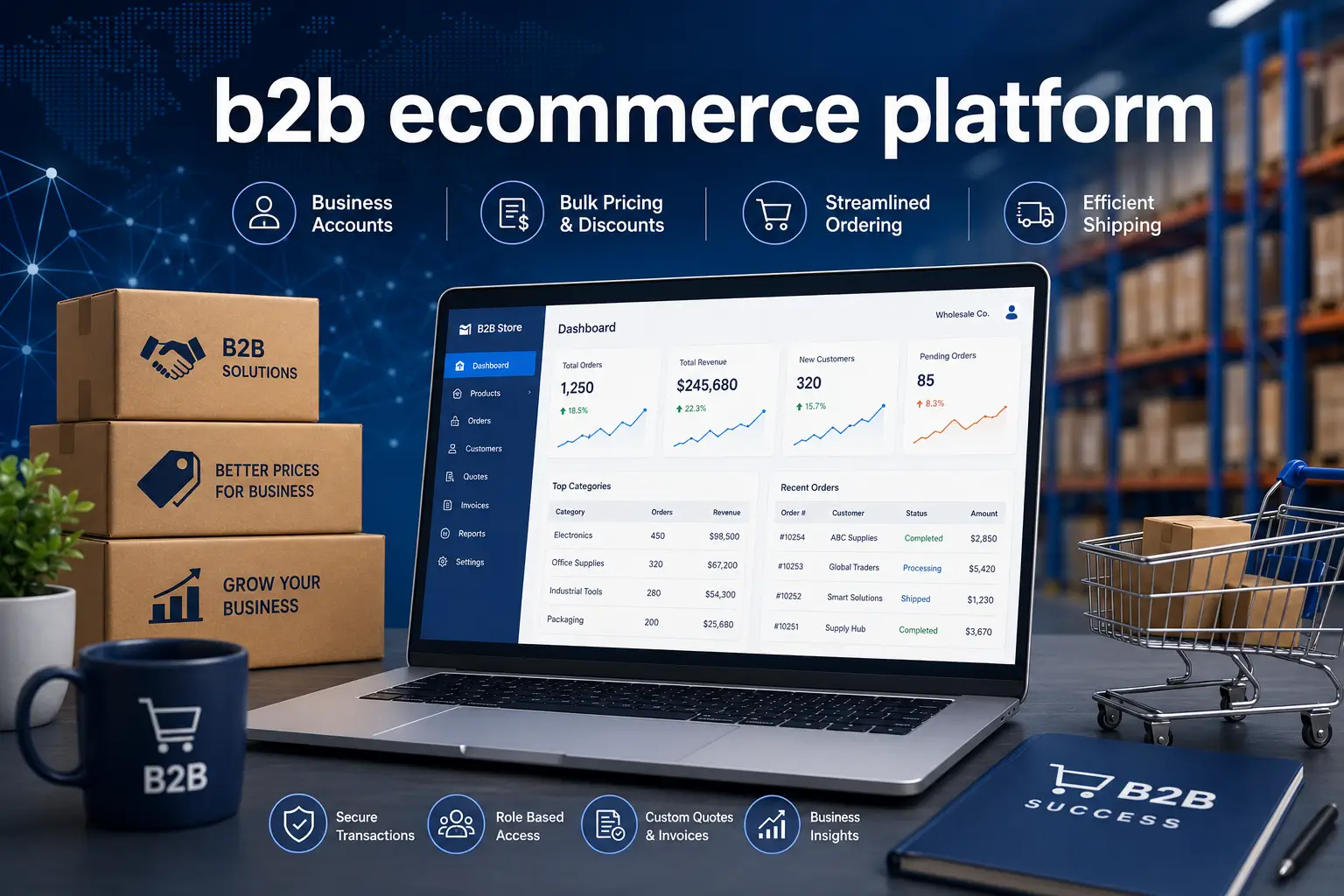
Choosing the right b2b platform can shape the future of your business. With more buyers moving online, having the right system in place is no longer optional.
This guide breaks everything down in simple words. No confusing terms. No long, complicated paragraphs.
By the end, you will know exactly what to look for, what to avoid, and how to choose an e-commerce platform that fits your business in 2026.
Introduction to B2B Ecommerce Platforms
Business buying has changed a lot in recent years. Buyers now expect the same smooth experience they get when shopping online for themselves.
This is where a B2B e-commerce platform comes in. It helps businesses sell products and services online, directly to other businesses.
Choosing the right one is not just a technical decision. It affects sales, customer relationships, and long-term growth.
In 2026, businesses have more options than ever. That makes choosing the right platform both exciting and a little overwhelming.
What Is a B2B Ecommerce Platform?
A b2b ecommerce platform is software that allows businesses to sell products or services online to other businesses.
Unlike regular online stores, these platforms are built for business buying needs. This includes:
- Bulk ordering
- Custom pricing for different customers
- Approval workflows for purchases
- Integration with business systems like inventory or accounting tools
In simple words, a b2b ecommerce platform is designed for complex buying relationships, not just single, quick purchases.
This is one of the biggest differences between B2B and regular consumer ecommerce.
Why Choosing the Right B2B Ecommerce Platform Matters in 2026
Picking the right b2b ecommerce platform matters more than ever in 2026. Buyer expectations have shifted, and technology has moved forward quickly.
Here is why this decision matters so much:
- Buyers expect self-service options. Many business buyers prefer to research and order online, without talking to a sales rep first.
- Competition is increasing. More businesses are moving online, so a smooth buying experience helps you stand out.
- Technology is evolving fast. Features like automation and smarter search are becoming standard, not extra.
- Switching platforms later is costly in time. Choosing wisely now avoids painful migrations down the road.
A well-chosen b2b platform supports growth. A poorly chosen one can slow your business down.
Key Features to Look For in a B2B Ecommerce Platform
Not all platforms are built the same. Here are the key features every business should look for.
Custom Pricing and Quoting Tools
B2B buyers often need different pricing based on contracts, volume, or relationships. Your b2b platform should support:
- Customer-specific pricing
- Quote requests and negotiations
- Discount rules based on order size
Without this flexibility, managing multiple business customers becomes difficult.
Bulk Ordering and Reordering Options
Business buyers often order large quantities, and they order repeatedly. A strong b2b platform should make this simple.
Look for features like:
- Bulk upload ordering
- Saved order templates
- Fast reordering from order history
These small features save buyers a lot of time, which improves loyalty.
Integration With Existing Business Systems
Your platform should not work in isolation. It needs to connect smoothly with other tools your business already uses.
This includes:
- Inventory management systems
- Accounting software
- Customer relationship management (CRM) tools
Good integration reduces manual work and keeps your data accurate across systems.
Types of B2B Ecommerce Platforms
There are different types of b2b platforms. Understanding these options helps you choose the right fit.
Open Source Platforms
These platforms give businesses full control over customization. However, they usually require more technical resources to manage and maintain.
They work well for businesses with in-house development teams.
SaaS-Based Platforms
Software-as-a-Service (SaaS) platforms are hosted and managed by the provider. This means less technical maintenance for your team.
These platforms are often easier to set up and are a popular choice for growing businesses.
Headless Platforms
Headless platforms separate the backend system from the frontend design. This gives businesses more flexibility in how their website looks and functions.
This option works well for businesses that want unique, custom-designed buying experiences.
Each type has its own strengths. The right choice depends on your team’s technical skills and long-term goals.
Important Factors to Consider Before Choosing
Beyond features, there are broader factors to think about before making a final decision.
Scalability for Business Growth
Your business will likely grow over time. Your b2b platform should grow with it.
Ask questions like:
- Can it handle more products as you expand?
- Can it support more customers without slowing down?
- Does it allow new features to be added later?
Choosing a platform that scales well saves you from switching systems too soon.
Security and Compliance Needs
B2B transactions often involve sensitive business data. Security should never be an afterthought.
Look for platforms that offer:
- Secure data handling
- Reliable user access controls
- Compliance with relevant industry standards
This protects both your business and your customers.
Ease of Use for Teams and Buyers
A powerful platform is not helpful if it is hard to use. Both your internal team and your buyers need a smooth experience.
Consider:
- How easy is it to manage products and orders?
- How simple is the buying process for customers?
- Does the platform require heavy training to use?
Simplicity often leads to better adoption and fewer support issues.
Common Mistakes to Avoid When Choosing a B2B Ecommerce Platform
Many businesses make avoidable mistakes when selecting a platform. Here are the most common ones.
- Focusing only on design. A nice-looking store means little without strong B2B functionality.
- Ignoring future growth. Choosing a platform that only fits current needs can cause problems later.
- Skipping integration checks. Poor integration leads to manual work and data errors.
- Underestimating buyer expectations. Buyers expect speed and simplicity, just like consumer shopping.
- Rushing the decision. Choosing quickly without proper research often leads to costly changes later.
Avoiding these mistakes early can save significant time and effort down the line.
B2B vs B2C Ecommerce Platforms: Key Differences
Understanding the difference between B2B and B2C platforms helps clarify what to look for.
B2C Ecommerce Platforms: These are built for individual consumers. They usually focus on fast checkout and single-item purchases.
B2B Ecommerce Platforms: These are built for business buyers. They support complex needs like bulk orders, custom pricing, and approval steps.
Here is a simple comparison:
| Feature | B2C Platform | B2B Ecommerce Platform |
| Buyer Type | Individual consumers | Businesses |
| Pricing | Fixed for everyone | Often custom per customer |
| Order Size | Usually small | Often bulk |
| Buying Process | Simple and quick | Can involve approvals |
| Relationships | One-time or repeat | Long-term business relationships |
This difference is exactly why choosing a platform built specifically for B2B needs matters so much.
Top B2B Ecommerce Platform Trends in 2026
Staying aware of current trends helps you choose a platform that stays relevant for years to come.
- AI-powered automation. More platforms are using AI to support tasks like order processing and personalized recommendations.
- Self-service buying. Buyers increasingly prefer researching and ordering without direct sales involvement.
- Composable and flexible architecture. Businesses want systems that can be customized without a full rebuild.
- Embedded payment options. Faster, more flexible payment methods are becoming a standard expectation.
- Personalized buyer experiences. Businesses expect tailored content, pricing, and recommendations, similar to consumer shopping.
Choosing a b2b platform that supports these trends helps future-proof your business.
Step-by-Step Guide to Choosing the Right Platform
Here is a simple step-by-step approach to guide your decision.
- Define your business needs. List out must-have features based on your products and customers.
- Research available platforms. Compare options based on features, not just popularity.
- Check integration options. Make sure the platform connects with your existing tools.
- Evaluate ease of use. Test how simple the platform is for both your team and buyers.
- Consider long-term scalability. Choose a platform that can grow alongside your business.
- Review security standards. Confirm the platform follows strong data protection practices.
- Make an informed decision. Choose based on overall fit, not just short-term convenience.
Following these steps reduces the risk of choosing the wrong platform.
Who Needs a B2B Ecommerce Platform?
A b2b platform is useful for many types of businesses.
Wholesalers and Distributors: Businesses selling in bulk to retailers or other companies benefit greatly from streamlined ordering systems.
Manufacturers: Manufacturers selling directly to other businesses can simplify complex pricing and ordering processes.
Service-Based B2B Companies: Even service-focused businesses can use these platforms for subscriptions, contracts, and repeat orders.
Growing Small and Medium Businesses: As businesses grow, manual order processing becomes harder to manage. A platform helps streamline this growth.
If your business sells to other businesses in any capacity, a b2b ecommerce is worth serious consideration.
Final Thoughts
Choosing the right b2b ecommerce platform is a major decision for any growing business. It affects daily operations, customer relationships, and long-term success.
By focusing on key features, avoiding common mistakes, and following a clear step-by-step process, you can make a confident, informed choice.
As buyer expectations continue to evolve in 2026, having the right platform in place gives your business a real competitive advantage.
We hope this guide helped simplify the process of choosing a b2b ecommerce platform. If you enjoyed this article, explore more helpful business and technology guides like this one on our website, WebInKey.
Frequently Asked Questions
What is the best B2B ecommerce platform for small businesses?
The best choice depends on your specific business needs and budget. SaaS-based platforms are often easier for small teams to manage. They require less technical setup and offer faster onboarding.
Is a B2B ecommerce platform different from a regular online store?
Yes, B2B platforms are built differently from regular online stores. They support bulk orders, custom pricing, and business-specific buying needs. This makes them better suited for complex, ongoing business relationships.
Can a B2B ecommerce platform handle bulk orders?
Yes, most B2B platforms are built specifically to support large, repeat orders. They often include features like saved order templates and quick reordering. This makes bulk purchasing faster and easier for business buyers.
Do B2B ecommerce platforms support custom pricing?
Yes, many platforms allow different pricing based on customer or order size. This helps businesses manage contracts, discounts, and negotiated rates. It also makes pricing more flexible for different types of buyers.
How long does it take to set up a B2B ecommerce platform?
Setup time varies depending on the platform and business complexity. SaaS platforms are usually faster to launch than custom-built systems. Most businesses can expect setup to take a few weeks on average.